Ofer For You (1)

Showing posts with label #IOEvsIOTvsM2M. Show all posts

Saturday, 5 October 2019

What's Home Assistant and why should home automation enthusiasts consider it?


Get all of your digital smart things talking to each other and doing more meaningful things!


Did you ever wish that Alexa or Google Assistant was able to let you have a smart home instead of just a bunch of smart things? It would be awesome to wake up to fresh coffee, have the news playing on a TV or radio, the toaster pre-heated and the temperature adjusted correctly and all the other things we can use smart gadgets to do, but have it do them automatically based on the time you set your alarm clock. How about dimming the room lights, turning on any backlighting on a monitor or display, and making everything cozy when you start playing a movie?

These are relatively simple tasks that should be able to be strung together and just work instead of us having to open 10 different apps and make 10 different adjustments individually. Isn't that what we all imagined when we decided to start having an automated home?

You can, and you can even do a lot more with a good automation hub. And a good automation hub doesn't have to be expensive because you can use the Home Assistant platform on something as cheap as a Raspberry Pi and bring your home setup into the 21st century for about $50.


What is an Automation Hub?

It's a smart appliance that can hook into other smart devices and issue commands that you've setup under the circumstances you've setup.We have a basic example of an inexpensive hub with Samsung's SmartThings. With the SmartThings software you can set up schedules or commands driven by an event (event as in it's cold outside, not event as in a concert or movie premiere) and individual smart devices can work together and be smart like they are supposed to be.

An Automation Hub is probably what you expected from your Echo or Google Home and didn't really get.


The Home Assistant platform works the same way. You let it find all the smart things on your local Wi-Fi network, connect with the ones it can control, and gives you a simple interface to make them act as a group based on when and how you want the single command to trigger. What makes Home Assistant great is that it isn't trying to focus on a single brand of smart products. Most of the gadgets you already have will work, and connecting to network services like IFTTT is straightforward and simple.
It installs on any always-connected operating system that can support Python 3 apps and it's very small and lightweight. This makes it great if you want to use a Rasberry Pi as a small and inexpensive Automation hub.

Why do I want this?

Maybe you don't. It's important to remember that Home Assistant can't control anything itself. It only acts as a master device that can tell other services like Philips Hue or Nest to do something. If you don't have any existing smart devices you won't see Home Assistant do anything. But if you have already invested in one or more smart devices, it's a really great way to extend the features and functionality that won't cost a lot of money.

Friday, 4 October 2019

IoT, ENDPOINT AND MOBILE SECURITY – THE EFFECTS OF BYOD ON CYBERSECURITY


IoT, ENDPOINT AND MOBILE SECURITY – THE EFFECTS OF BYOD ON CYBERSECURITY


Several industries and IT personnel have come to terms with the modern-day approach of Bring Your Own Device (BYOD), as they strive to make operations more and more flexible, efficient and seamless, addressing every possible challenge that could hinder the workflow in any way. Companies are adopting workplace mobility practices amidst the proliferation of modern technology and the increasing number of connected devices that people are using in their day-to-day routine. Permission to use own mobile devices at the workplace and the growing network of IoT devices is leading to the expansion of network with an increasing number of endpoints. It has become imperative for the companies to have befitting cybersecurity policies and a robust endpoint security solution that best suits their work model and ensures a safe haven for the business-critical processes and data.


But before defining cybersecurity policies around BYOD and mobile devices and IoT devices, one should be clear with the distinctions between mobile device management and endpoint security. They should profile the IoT and mobile devices to understand the different operating systems they use, the functions they are capable of performing and the actual utility of them for the business. This will help in defining policies that can effectively control the use of such devices at the workplace as well as outside the work premises for work purposes.


As per a report by Crystal Market Research, the global BYOD market is expected to grow at a CAGR of 15.38% between 2012 and 2022 and reach USD 318.41 billion in 2022.[1] This trend, often labelled as IT consumerisation, is here to stay, as more and more companies adopt BYOD model, allowing employees to carry their own devices and connect them with the organisational network to access important business data and applications for work purposes.


While BYOD is increasingly touted as an excellent business model, well suited for improving workplace flexibility and productivity; however, it has a significant impact on the IT structure of an enterprise.


Some of the major impacts of BYOD on a company’s cybersecurity setup are as follows:

Expands IT infrastructure
More and more owned portable devices like laptops, tablets and smartphones brought by employees to offices significantly expand the network as they serve as new endpoints to the network. These personal devices have to be connected to the company’s IT infrastructure for which the IT team has to identify the employees’ mobile devices that they’ll be using to access the corporate data and then make necessary adjustments to the company’s IT setup to accommodate them.
Companies are also required to audit these devices to ensure that they align with the company’s security stipulations and device policies, and all this work increases the IT management costs of the company.

Increased risk of data leakage
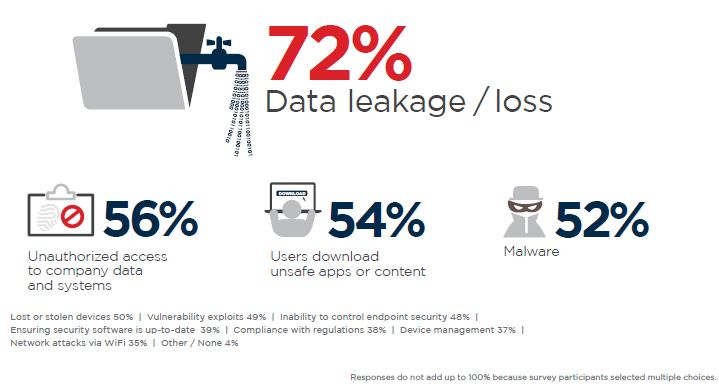
More and more personal devices used for work purposes increase the number of endpoints on the company’s IT network. Presence of multiple endpoints makes it difficult to monitor the activities on each device and tackle malicious programmes or users that try to gain unauthorised access to such devices and thereby the IT infrastructure. This escalates the threat of cybersecurity breach and data leakage.


Mobile devices are considered the weakest link to a company’s security framework. They need to be constantly updated with the latest security patch to cover any type of loopholes and stay protected from any type of malware or virus attack or any unauthorised access. Employees are as much responsible for ensuring the security of their own mobile devices and should see to it that their devices are password protected and updated with the latest software and security patches. The employees and companies are both responsible for reviewing a mobile device’s compliance with the security protocols.

Mixes personal data and corporate data
Devices carried as part of the BYOD model have both corporate and personal data, which makes the loss or theft of such devices a riskier affair.

Companies should take the initiative to back up the essential corporate data present on the device in order to retrieve the data in case of a technical glitch, cybersecurity breach or theft or loss of the device.
Companies can encourage containerisation, which helps in isolating business content in its own workspace thereby keeping the business information secure while still allowing the employees to use their devices for personal as well as work purposes. The approach also helps the company to safely remove the business-related information from the user’s device when the employee exits the company.

Thursday, 3 October 2019

IOE VS. IOT VS. M2M: WHAT’S THE DIFFERENCE AND DOES IT MATTER?


Disruptive technologies of tomorrow usually lack widely accepted definitions and are often invented by individual entities not necessarily responsible for formulating and enforcing industry standards that govern the technology evolution. Innovation and advancements in the field of connected technologies started with networked computers which then progressed through the Internet era and have evolved beyond the concept of connecting physical objects as part of the Internet of Things (IoT) revolution.