Ofer For You (1)

Sunday, 13 October 2019

What is Carding, And How Can You Prevent It?


What is Carding

Carding (OWASP OAT-001) is an automated form of payment fraud in which fraudsters test a bulk list of credit/debit card data against a merchant’s payment processing system to verify the stolen card details. Such card details are stolen from different payment channels, another application, or purchased from dark web marketplaces. Hackers also apply card cracking (OWASP OAT-010) practices to obtain credit card details.

Why does carding happen?

The primary reason behind carding attacks is to illegally purchase goods or cash out the cards. Hackers deploy bots on payment processing pages to verify the validity of stolen card details. The authenticity of stolen card details are often unknown to the carders, and therefore, bots are deployed on payment processing pages to compose the correct set of card details. After identifying the right set of card details, hackers can sell them on dark web marketplaces or simply cash out (OWASP OAT - 012) the cards.

Mitigation of carding

The Open Web Application Security Project (OWASP), a not-for-profit charitable organization focused on improving the security of software, suggests a list of countermeasures to address carding attacks. The list includes completely outsourcing all aspects of payments to providers that are equipped with adequate facilities to address carding attacks; increasing the minimum checkout value; and IP blacklisting. Dedicated bot mitigation solutions take a different approach and effectively eliminate carding attacks through deep user behavior, and intent analysis.


Learn To Hack FB

"The Hackers Street"

Or, Subscribe to our live feed to get instant email alerts 

https://feedburner.google.com/fb/a/mailverify?uri=blogspot/MUiww 

We don't spam.


Saturday, 12 October 2019

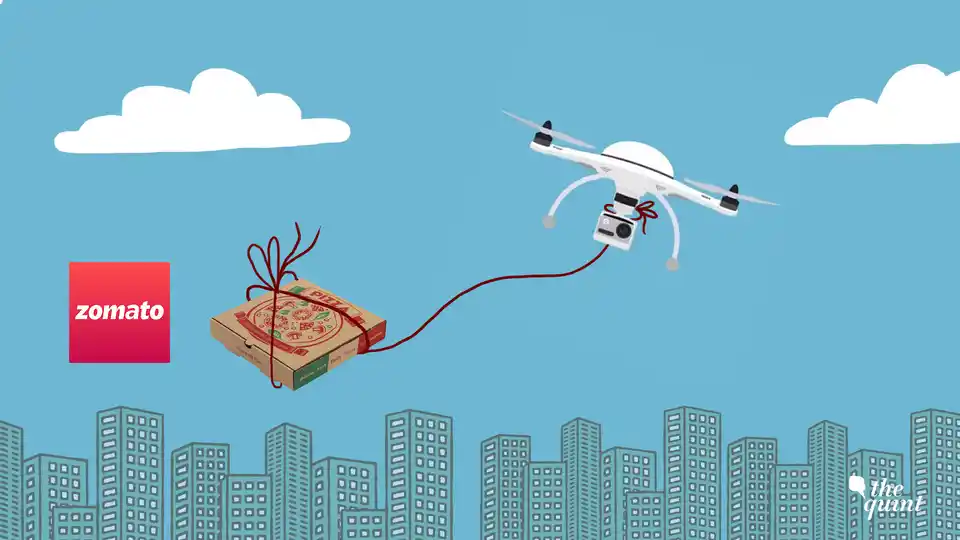
Food delivery by drone! Zomato successfully tests new technology


Zomato said that the average time taken by the biker fleet to deliver is 30.5 minutes. It added that the only way to reduce that time to 15 minutes is if the aerial route is taken.


Online food platform Zomato said on Wednesday that it has successfully tested its maiden drone delivery technology. A hybrid drone was used for the experiment which was able to cover a distance of 5 km in about ten minutes carrying a payload of 5 kg. It covered the distance at a peak speed of 80 km per hour.
In December 2018, Zomato had acquired drone delivery startup TechEagle Innovations in an attempt to explore the drone-based food delivery space in India.
Currently, regulations prohibit payload carriage on drones as well as drone operations outside the visual line of sight. However, the government had said that the norms will be evolved with time as and when companies are able to exhibit newer technologies.
Keeping in line with this, Zomato has said that it is forming a consortium to carry out experimental operations of drones beyond line of sight as per the DGCA's program for conducting such trial, according to a report in The Indian Express.
"Inbuilt sensors and an onboard computer allow the drone to sense and avoid static and dynamic objects, overall making it more efficient for autonomous flights," said the company, as mentioned in the daily. The Gurugram-based company said that each drone is being tested with remote pilot supervision. It further added that it might do away with pilot supervision as and when the company collects more data.
Zomato said that the average time taken by the biker fleet to deliver is 30.5 minutes. It added that the only way to reduce that time to 15 minutes is if the aerial route is taken. Founder and CEO Deepinder Goyal said that they have been working towards building sustainable and safe delivery tech and with their first successful test, food delivery by drones is no longer a pipe dream.

Goyal also added that the tech is ready and that drone delivery will be commonplace sooner or later. He said that they will also have to keep regulatory hurdles and the government's concerns in mind for this endeavor.
Not only Zomato, but Amazon had also said earlier this month that self-piloted drones will be delivering packages to shoppers in the coming months. Amazon said its new drones use computer vision and machine learning to detect and avoid people or clotheslines in backyards when landing. "From paragliders to power lines to a corgi in the backyard, the brain of the drone has safety covered," said Jeff Wilke, who oversees Amazon's retail business. 


Learn To Hack FB

"The Hackers Street"

Or, Subscribe to our live feed to get instant email alerts 

https://feedburner.google.com/fb/a/mailverify?uri=blogspot/MUiww 

We don't spam.


Friday, 11 October 2019

What You Need To Know About Cyber Threats To Drones


  • The usage of drones has gone beyond just military purposes. Filmmaking, photography, and surveillance are among the many industries that are deploying drones for multiple purposes.
  • The increase in usage has led to cybercriminals using drones as a part of their attacks.
The drone market today
Drones are unmanned ariel vehicles that were traditionally used in the defense forces. Although they are still widely used in this field, a number of other sectors are employing drones.
  • In fact, Amazon is looking to use drones for delivery in the near future.
  • With the market steadily growing, drones are becoming accessible and affordable for a larger section of the world’s population.
Cyber threats to drones
Considering the current scenario of drones, there is a risk of attackers using them for malicious activities or hacking them to gather data without consent.
  • Hackers may employ drones as spying devices to collect data. With an advanced microphone, they can also eavesdrop on conversations. This can affect the privacy of citizens as well as collect data from confidential government locations.
  • Fake signals can be fed that tamper with the Global Positioning System (GPS) of the drones. This can cause massive impacts for military drones.
  • Small computers can be attached to drones to exploit WiFi, Bluetooth, or Radio-frequency identification vulnerabilities in restricted areas.
  • Drones are small and don’t make much noise making them hard to detect.
Detecting malicious drones

Researchers are working on ways to detect malicious drones. Some of the measures include:
  • Deploying radio-frequency scanners that look for specific transmissions from drones.
  • Acoustic sensors that match the drone sound against a signature database for a match
  • Geofencing that involves setting up a virtual border around a physical location to detect when drones enter the marked area.
These methods come with their own set of drawbacks. There are several other methods available to detect malicious drones.


Learn To Hack FB

"The Hackers Street"

Or, Subscribe to our live feed to get instant email alerts 

https://feedburner.google.com/fb/a/mailverify?uri=blogspot/MUiww 

We don't spam.


Thursday, 10 October 2019

5G Network: How It Works, and Is It Dangerous?

With 5G, mobile devices will be able to send and receive information in less than one-thousandth of a second, appearing instantaneous to the user.


The fifth generation of cellular technology, 5G, is the next great leap in speed for wireless devices. This speed includes both the rate mobile users can download data to their devices and the latency, or lag, they experience between sending and receiving information.
5G aims to deliver data rates that are 10 to 100 times faster than current 4G networks. Users should expect to see download speeds on the order of gigabits per second (Gb/s), much greater than the tens of megabits per second (Mb/s) speeds of 4G.
"That's significant because it will enable new applications that are just not possible today," said Harish Krishnaswamy, an associate professor of electrical engineering at Columbia University in New York. "Just for an example, at gigabits per second data rates, you could potentially download a movie to your phone or tablet in a matter of seconds. Those type of data rates could enable virtual reality applications or autonomous driving cars."
Apart from requiring high data rates, emerging technologies that interact with the user's environment like augmented reality or self-driving cars will also require extremely low latency. For that reason, the goal of 5G is to achieve latencies below the 1-millisecond mark. Mobile devices will be able to send and receive information in less than one-thousandth of a second, appearing instantaneous to the user. To accomplish these speeds, the rollout of 5G requires new technology and infrastructure.

The new network

Since the earliest generation of mobile phones, wireless networks have operated on the same radio-frequency bands of the electromagnetic spectrum. But as more users crowd the network and demand more data than ever before, these radio-wave highways become increasingly congested with cellular traffic. To compensate, cellular providers want to expand into the higher frequencies of millimeter waves.
Millimeter waves use frequencies from 30 to 300 gigahertz, which are 10 to 100 times higher than the radio waves used today for 4G and WiFi networks. They're called millimeters because their wavelengths vary between 1 and 10 millimeters, whereas radio waves are on the order of centimeters.
The higher frequency of millimeter waves may create new lanes on the communication highway, but there's one problem: Millimeter waves are easily absorbed by foliage and buildings and will require many closely spaced base stations, called small cells. Fortunately, these stations are much smaller and require less power than traditional cell towers and can be placed atop buildings and light poles.
The miniaturization of base stations also enables another technological breakthrough for 5G: Massive MIMO. MIMO stands for multiple-input multiple-output and refers to a configuration that takes advantage of the smaller antennas needed for millimeter waves by dramatically increasing the number of antenna ports in each base station.
"With a massive amount of antennas — tens to hundreds of antennas at each base station — you can serve many different users at the same, increasing the data rate," Krishnaswamy said. At the Columbia high-Speed and Millimeter-wave IC (COSMIC) lab, Krishnaswamy and his team designed chips that enable both millimeter-wave and  MIMO technologies. "Millimeter-wave and massive MIMO are the two biggest technologies 5G will use to deliver the higher data rates and lower latency we expect to see."
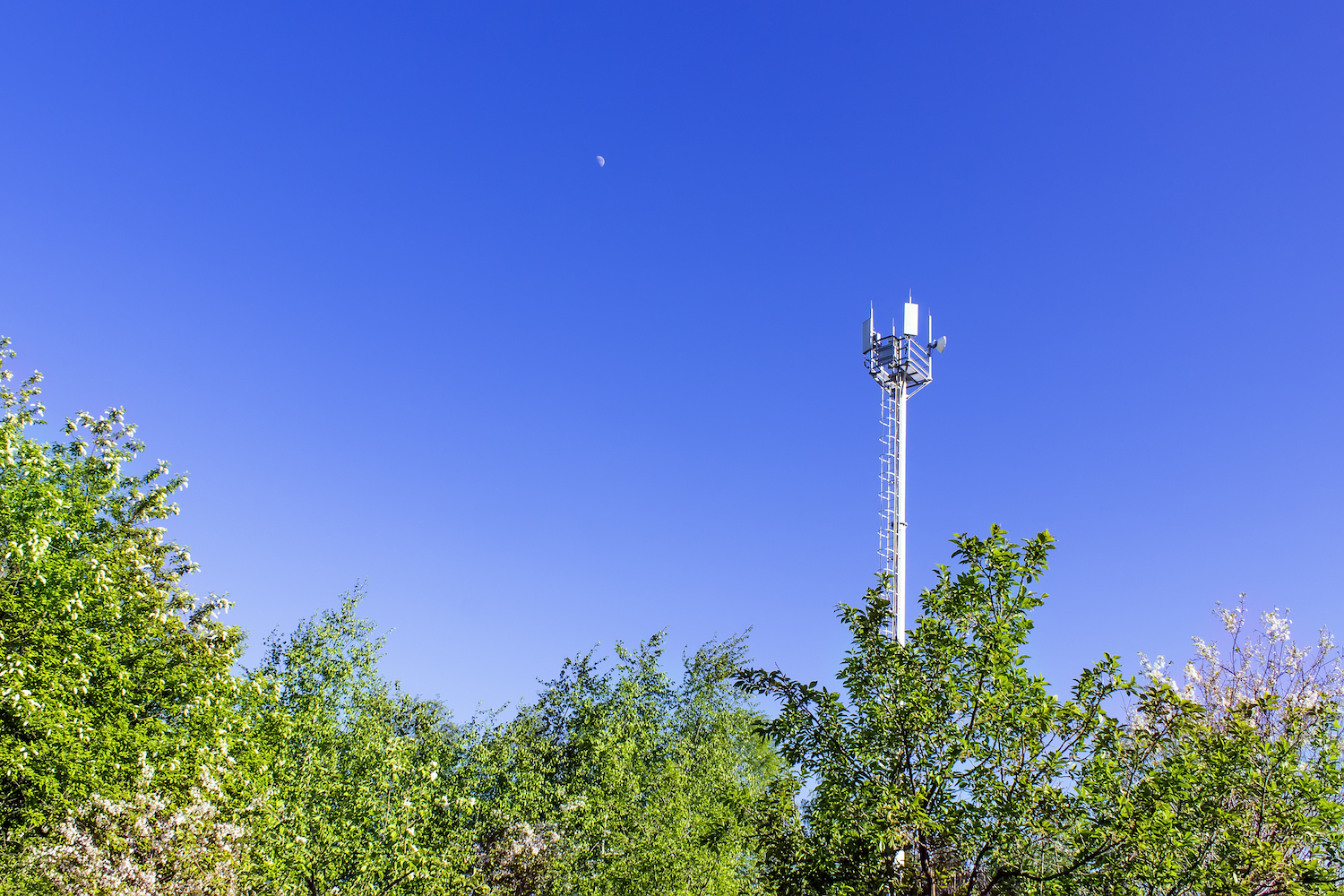
Although 5G will require more base stations, they'll be much smaller and require less power than traditional cell towers.

Is 5G dangerous?

Although 5G may improve our day to day lives, some consumers have voiced concern about potential health hazards. Many of these concerns are over 5G's use of higher energy millimeter-wave radiation.
"There's often confusion between ionizing and non-ionizing radiation because the term radiation is used for both," said Kenneth Foster, a professor of bioengineering at Pennsylvania State University. "All light is radiation because it is simply energy moving through space. It's ionizing radiation that is dangerous because it can break chemical bonds."
Ionizing radiation is the reason we wear sunscreen outside because short-wavelength ultraviolet light from the sky has enough energy to knock electrons from their atoms, damaging skin cells and DNA. Millimeter waves, on the other hand, are non-ionizing because they have longer wavelengths and not enough energy to damage cells directly.
"The only established hazard of non-ionizing radiation is too much heating," Foster said, who has studied the health effects of radio waves for nearly 50 years. "At high exposure levels, radio frequency (RF) energy can indeed be hazardous, producing burns or other thermal damage, but these exposures are typically incurred only in occupational settings near high-powered radio frequency transmitters, or sometimes in medical procedures gone awry."
Many of the public's outcries over the adoption of 5G echo concerns over previous generations of cellular technology. Skeptics believe exposure to non-ionizing radiation may still be responsible for a range of illnesses, from brain tumors to chronic headaches. Over the years, there have been thousands of studies investigating these concerns.
In 2018, the National Toxicology Program released a decade-long study that found some evidence of an increase in brain and adrenal gland tumors in male rats exposed to the RF radiation emitted by 2G and 3G cellphones, but not in mice or female rats. The animals were exposed to levels of radiation four times higher than the maximum level permitted for human exposure.
Advertisement
Many opponents to the use of RF waves cherry-pick studies that support their argument, and often ignore the quality of the experimental methods or inconsistency of the results, Foster said. Although he disagrees with many of the conclusions skeptics have about previous generations of cellular networks, Foster agrees that we need more studies on the potential health effects of 5G networks.
"Everyone I know, including me, is recommending more research on 5G because there's not a lot of toxicology studies with this technology," Foster said.
For the proponents of 5G, many believe the benefits 5G can provide to society far outweigh the unknowns.
"I think 5G will have a transformational impact on our lives and enable fundamentally new things," Krishnaswamy said. "What those types of applications will be and what that impact is, we can't say for sure right now. It could be something that takes us by surprise and really changes something for society. If history has taught us anything, then 5G will be another example of what wireless can do for us."


Learn To Hack FB

"The Hackers Street"

Or, Subscribe to our live feed to get instant email alerts 

https://feedburner.google.com/fb/a/mailverify?uri=blogspot/MUiww 

We don't spam.