Ofer For You (1)

Showing posts with label 5g. Show all posts

Thursday, 10 October 2019

5G Network: How It Works, and Is It Dangerous?

With 5G, mobile devices will be able to send and receive information in less than one-thousandth of a second, appearing instantaneous to the user.


The fifth generation of cellular technology, 5G, is the next great leap in speed for wireless devices. This speed includes both the rate mobile users can download data to their devices and the latency, or lag, they experience between sending and receiving information.
5G aims to deliver data rates that are 10 to 100 times faster than current 4G networks. Users should expect to see download speeds on the order of gigabits per second (Gb/s), much greater than the tens of megabits per second (Mb/s) speeds of 4G.
"That's significant because it will enable new applications that are just not possible today," said Harish Krishnaswamy, an associate professor of electrical engineering at Columbia University in New York. "Just for an example, at gigabits per second data rates, you could potentially download a movie to your phone or tablet in a matter of seconds. Those type of data rates could enable virtual reality applications or autonomous driving cars."
Apart from requiring high data rates, emerging technologies that interact with the user's environment like augmented reality or self-driving cars will also require extremely low latency. For that reason, the goal of 5G is to achieve latencies below the 1-millisecond mark. Mobile devices will be able to send and receive information in less than one-thousandth of a second, appearing instantaneous to the user. To accomplish these speeds, the rollout of 5G requires new technology and infrastructure.

The new network

Since the earliest generation of mobile phones, wireless networks have operated on the same radio-frequency bands of the electromagnetic spectrum. But as more users crowd the network and demand more data than ever before, these radio-wave highways become increasingly congested with cellular traffic. To compensate, cellular providers want to expand into the higher frequencies of millimeter waves.
Millimeter waves use frequencies from 30 to 300 gigahertz, which are 10 to 100 times higher than the radio waves used today for 4G and WiFi networks. They're called millimeters because their wavelengths vary between 1 and 10 millimeters, whereas radio waves are on the order of centimeters.
The higher frequency of millimeter waves may create new lanes on the communication highway, but there's one problem: Millimeter waves are easily absorbed by foliage and buildings and will require many closely spaced base stations, called small cells. Fortunately, these stations are much smaller and require less power than traditional cell towers and can be placed atop buildings and light poles.
The miniaturization of base stations also enables another technological breakthrough for 5G: Massive MIMO. MIMO stands for multiple-input multiple-output and refers to a configuration that takes advantage of the smaller antennas needed for millimeter waves by dramatically increasing the number of antenna ports in each base station.
"With a massive amount of antennas — tens to hundreds of antennas at each base station — you can serve many different users at the same, increasing the data rate," Krishnaswamy said. At the Columbia high-Speed and Millimeter-wave IC (COSMIC) lab, Krishnaswamy and his team designed chips that enable both millimeter-wave and  MIMO technologies. "Millimeter-wave and massive MIMO are the two biggest technologies 5G will use to deliver the higher data rates and lower latency we expect to see."
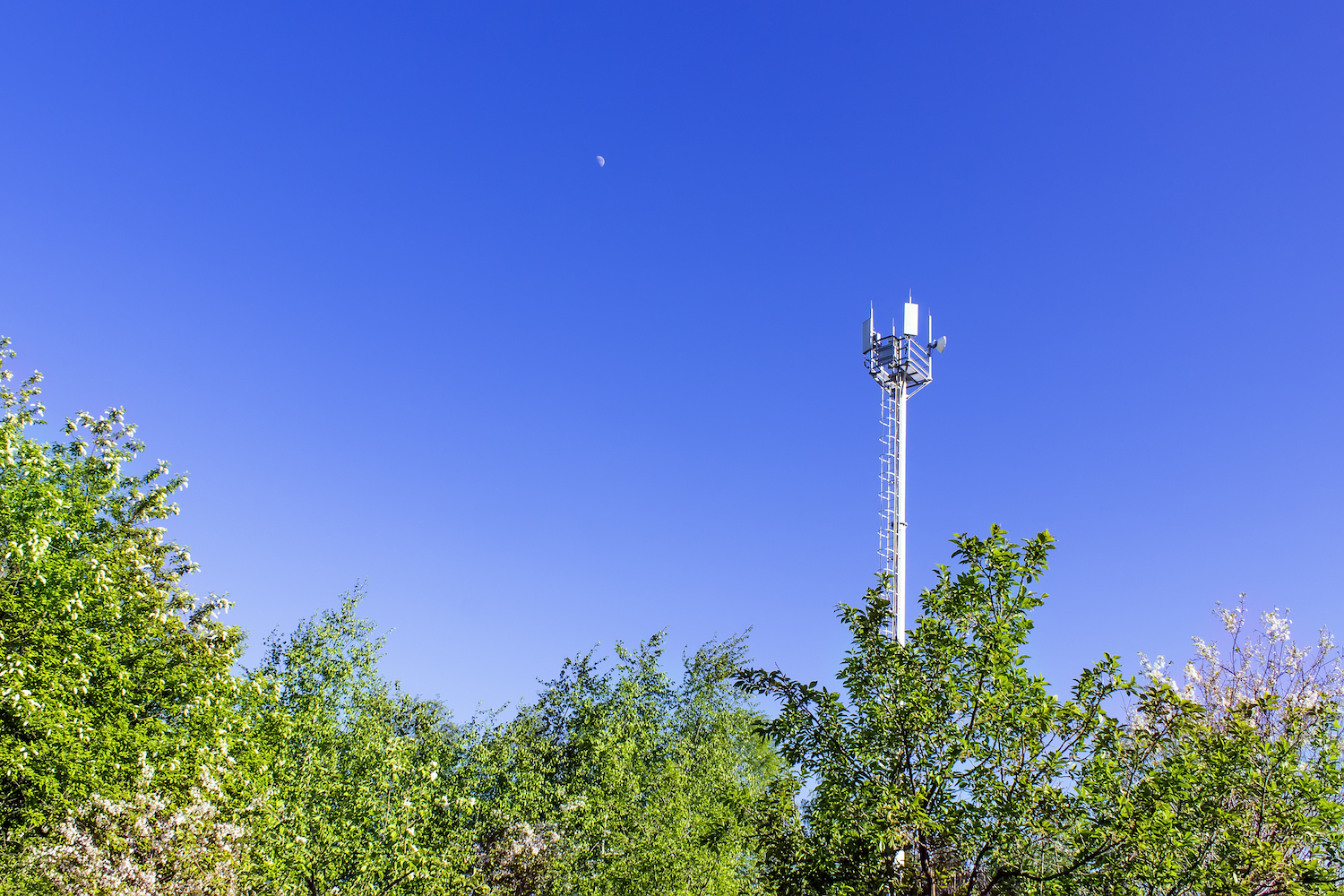
Although 5G will require more base stations, they'll be much smaller and require less power than traditional cell towers.

Is 5G dangerous?

Although 5G may improve our day to day lives, some consumers have voiced concern about potential health hazards. Many of these concerns are over 5G's use of higher energy millimeter-wave radiation.
"There's often confusion between ionizing and non-ionizing radiation because the term radiation is used for both," said Kenneth Foster, a professor of bioengineering at Pennsylvania State University. "All light is radiation because it is simply energy moving through space. It's ionizing radiation that is dangerous because it can break chemical bonds."
Ionizing radiation is the reason we wear sunscreen outside because short-wavelength ultraviolet light from the sky has enough energy to knock electrons from their atoms, damaging skin cells and DNA. Millimeter waves, on the other hand, are non-ionizing because they have longer wavelengths and not enough energy to damage cells directly.
"The only established hazard of non-ionizing radiation is too much heating," Foster said, who has studied the health effects of radio waves for nearly 50 years. "At high exposure levels, radio frequency (RF) energy can indeed be hazardous, producing burns or other thermal damage, but these exposures are typically incurred only in occupational settings near high-powered radio frequency transmitters, or sometimes in medical procedures gone awry."
Many of the public's outcries over the adoption of 5G echo concerns over previous generations of cellular technology. Skeptics believe exposure to non-ionizing radiation may still be responsible for a range of illnesses, from brain tumors to chronic headaches. Over the years, there have been thousands of studies investigating these concerns.
In 2018, the National Toxicology Program released a decade-long study that found some evidence of an increase in brain and adrenal gland tumors in male rats exposed to the RF radiation emitted by 2G and 3G cellphones, but not in mice or female rats. The animals were exposed to levels of radiation four times higher than the maximum level permitted for human exposure.
Advertisement
Many opponents to the use of RF waves cherry-pick studies that support their argument, and often ignore the quality of the experimental methods or inconsistency of the results, Foster said. Although he disagrees with many of the conclusions skeptics have about previous generations of cellular networks, Foster agrees that we need more studies on the potential health effects of 5G networks.
"Everyone I know, including me, is recommending more research on 5G because there's not a lot of toxicology studies with this technology," Foster said.
For the proponents of 5G, many believe the benefits 5G can provide to society far outweigh the unknowns.
"I think 5G will have a transformational impact on our lives and enable fundamentally new things," Krishnaswamy said. "What those types of applications will be and what that impact is, we can't say for sure right now. It could be something that takes us by surprise and really changes something for society. If history has taught us anything, then 5G will be another example of what wireless can do for us."


Learn To Hack FB

"The Hackers Street"

Or, Subscribe to our live feed to get instant email alerts 

https://feedburner.google.com/fb/a/mailverify?uri=blogspot/MUiww 

We don't spam.


Monday, 7 October 2019

3 Reasons Why Fiber is the First Choice to Support 5G Networks

It’s no secret that 5G will bring us faster speeds, better performance and more reliable service for our mobile devices. (For example, 5G will enable users to download a high-def film in under one second as opposed to the 10+ minutes it currently takes on 4G/LTE.)
But it will also place huge demands on wired infrastructure. Before 5G networks become prevalent, your network infrastructure needs to be able to reliably and continuously support thousands of devices (or more) – as well as the data collected and transmitted by these devices.
A good example involves the concept of autonomous vehicles. With 5G networks, connected cars will be able to communicate with each other to decrease safety hazards and anticipate potential problems, as well as read live map and traffic data to make route adjustments for time efficiency. To make this a reality, lots of real-time data will need to be collected and shared over a network so that autonomous, immediate adjustments can be made.
Every version of mobile phone networks has been created with a specific purpose in mind:
  • 1G was introduced in 1982 to support analog voice
  • 2G was introduced in 1991 to support digital voice and messaging
  • 3G was introduced in 1998 to support data and multimedia service (like email)
  • 4G/LTE was introduced in 2008 to support IP voice and data, as well as video and mobile internet service
  • 5G – the latest generation – is designed to support IoT and Big Data (like connected/autonomous cars, factory robotics, smart cities, etc.)
When you compare these five generations, it’s easy to see why 5G will need so much more from a wired network than its predecessors. To be considered “5G compatible,” a mobile device must stay connected and able to stream 4K-quality video seamlessly – no matter the traffic density.
Key 5G Requirements Infographic
Why is Fiber Necessary for 5G Networks?
According to a 5G Operator Survey released by the Telecommunications Industry Association (TIA) in 2017, 5G operators consider fiber important for the backhaul portion of 5G networks (in fact, 83% say fiber is “very important”). By the end of 2020, 33% expect their companies to be offering commercial 5G services.
Although every network is different, one thing will remain true for each one that supports 5G: lots of fiber will be needed. Why? There are a few reasons …

1. Creation and Transfer of Real-Time Data

5G supports IoT and Big Data, which rely heavily on real-time data collection and transfer. Because decisions are being made instantaneously (and automatically, in many cases) based on this data, lower latency and higher bandwidth levels are needed to ensure that the data gets to where it needs to go quickly.
Because of its unlimited bandwidth potential, fiber is the cable of choice to support these bandwidth levels.

2. Increasing Network Demands

Because of this 24/7 data collection and transfer, there are many more demands made on networks: higher network availability levels, full wireless network coverage (no dead spots), lower latency and higher bandwidth capabilities (as mentioned earlier) – all caused by an influx of connected devices.
In part, this is thanks to the growing numbers of people and the devices they carry, which connect their users to unlimited data. But there’s another layer of connectivity at play today, too: Devices that aren’t controlled or managed by people (PoE LED lighting fixtures, surveillance cameras, and digital displays, for example). Instead, these devices connect directly to the network and operate independently.
By bringing fiber closer to the edge of the network, stadiums and arenas can take advantage of 5G’s improved bandwidth and capacity levels.

3. Higher Radio Frequencies and Small Cells

To achieve expected performance levels for 5G networks, more small cells (or nodes) and mobile edge computing will be needed to eliminate network bottlenecks. These small-cell deployments often utilize the millimeter wave spectrum, relying heavily on fiber cabled connections for the backhaul portion of the network.
To handle larger amounts of data, 5G uses much higher radio frequencies than existing mobile networks. These higher frequencies, however, have very short ranges. For 5G to work as expected and provide multi-gigabit service to users and devices, many additional “cells” covering small areas must be installed throughout a venue (spaced as close together as 200 feet apart, according to some experts).
To provide multi-gigabit service to the users and applications that want access to 5G networks, the cells redistribute signals from cellular carriers through the air or via direct line, bringing them inside and/or dispersing them across a vast area. Without them, carriers struggle to get their signals indoors. Based on application size, they may take the form of femto-cells, small cells, enterprise radio access networks (RAN), distributed antenna systems (DAS) or Cloud RAN (CRAN).
Fiber is the preferred option for 5G because of its scalability, security and ability to handle the vast amount of backhaul traffic being generated.
In addition to being the No. 1 option for network backhauls, fiber is also preferred for the fronthaul portion of the network as well (the portion that connects the small cells).
It can handle 5G’s increased speeds with lower attenuation, is immune to electromagnetic interference and offers practically unlimited bandwidth potential.

Getting Ready for 5G

The launch of 5G will bring enhanced capacity and lower latency straight to networks. The legacy copper-based infrastructures that have supported connectivity so well for so long won’t be able to keep up with 5G bandwidth demands.
Belden can help ensure that you have the right fiber optic cable system in place to support enhanced 5G capabilities when they arrive. For more information, download our android app

Learn To Hack FB

"The Hackers Street"

Or, Subscribe to our live feed to get instant email alerts 

https://feedburner.google.com/fb/a/mailverify?uri=blogspot/MUiww 

We don't spam.


Saturday, 5 October 2019

Qualcomm may launch two variants of the upcoming Snapdragon 865 processor: Report


“According to industry expectations, the Snapdragon 865 platform will offer both integrated and non-integrated 5G solutions for better cost-effective solutions”

Despite being only a few months into the life cycle of the Qualcomm Snapdragon 855 platform, Qualcomm is at a seemingly advanced stage with its next-generation platform, the Snapdragon 865. Codenamed Snapdragon 8250, the new processing platform from the world’s leading mobile chipset manufacturer will presumably bring with itself a host of new features, upgrades, and improvements. Moreover, given that it will power a major chunk of devices in 2020, 5G will play a big role in deciding what the new processor (and phones that it powers) will bring to the table. Now, according to recent reports, the Snapdragon 865 mobile platform may be officially made available in two variants.


According to Roland Quandt of WinFuture.de reports across the internet, the Qualcomm Snapdragon 865 may be made available in two variants – one with the standard platform and an optional Snapdragon X55 5G modem, and the other with integrated 5G solution. With the new generation connectivity standard set to become mainstream next year, offering an integrating flagship processing platform with the latest connectivity chip and antennae will be crucial, as this would allow smartphone manufacturers to free up the space that an additional modem would take up. In turn, this could be used to fit in any extra feature, such as an audio DAC, a larger battery or any additional module as OEMs deem fit.

However, 5G connectivity is unlikely to be rolled out worldwide even by 2020, and the initial plans would certainly be at steeper pricing than the mobile plans that users are expected to. A mainstream 5G rollout is only expected to happen in a select few nations such as the US and South Korea, which have been early adopters of the technology. As a result, a two-variant strategy makes sense for Qualcomm, since this would allow them to even price their product better.


For instance, in a Korea-centric flagship smartphone, the integrated Snapdragon 865 platform can be used, hence making space for additional modules such as neural processing engines. However, for the India variant of the same device, the OEM may choose the second variant that comes with the optional 5G module, thereby providing some cost-benefit to OEMs, which in turn would allow them to price their products better in a value-sensitive market such as India.
The information comes courtesy of early leaks, so the validation of these reports remain to be proven in the long run. However, it does make a lot of sense commercially, to produce a two-variant commercial availability of the processor. The next-generation Snapdragon 5G platform is expected to present compliance with both sub-6.0GHz and millimeter-wave 5G connectivity, thereby bringing versatility to a smartphone’s connectivity. It may also lay precedent for upcoming processors from other manufacturers to follow suit, all of which shall be revealed in days and months to come.


Learn To Hack FB

"The Hackers Street"